
Markets have experienced renewed pressure as President Trump implements additional tariffs on key trading partners including Canada, Mexico, and China. The administration's decision to move forward with these measures has eliminated speculation about potential delays or negotiated compromises. Further tariff actions are anticipated, including retaliatory measures against nations that levy duties on American products.
The prospect of escalating trade tensions has sparked market anxiety, with investors concerned about the potential impact on consumer prices and economic momentum. These worries have triggered recent declines across broad market measures.
Understanding the market impact of trade measures
 |
Diversified investment strategies prove particularly valuable during periods of market uncertainty like we're experiencing now. Similar to the trade-related volatility of 2017 and 2018, markets have shown sensitivity to policy developments since the new presidential term began. Yet historical patterns demonstrate markets' ability to overcome such challenges over extended periods.
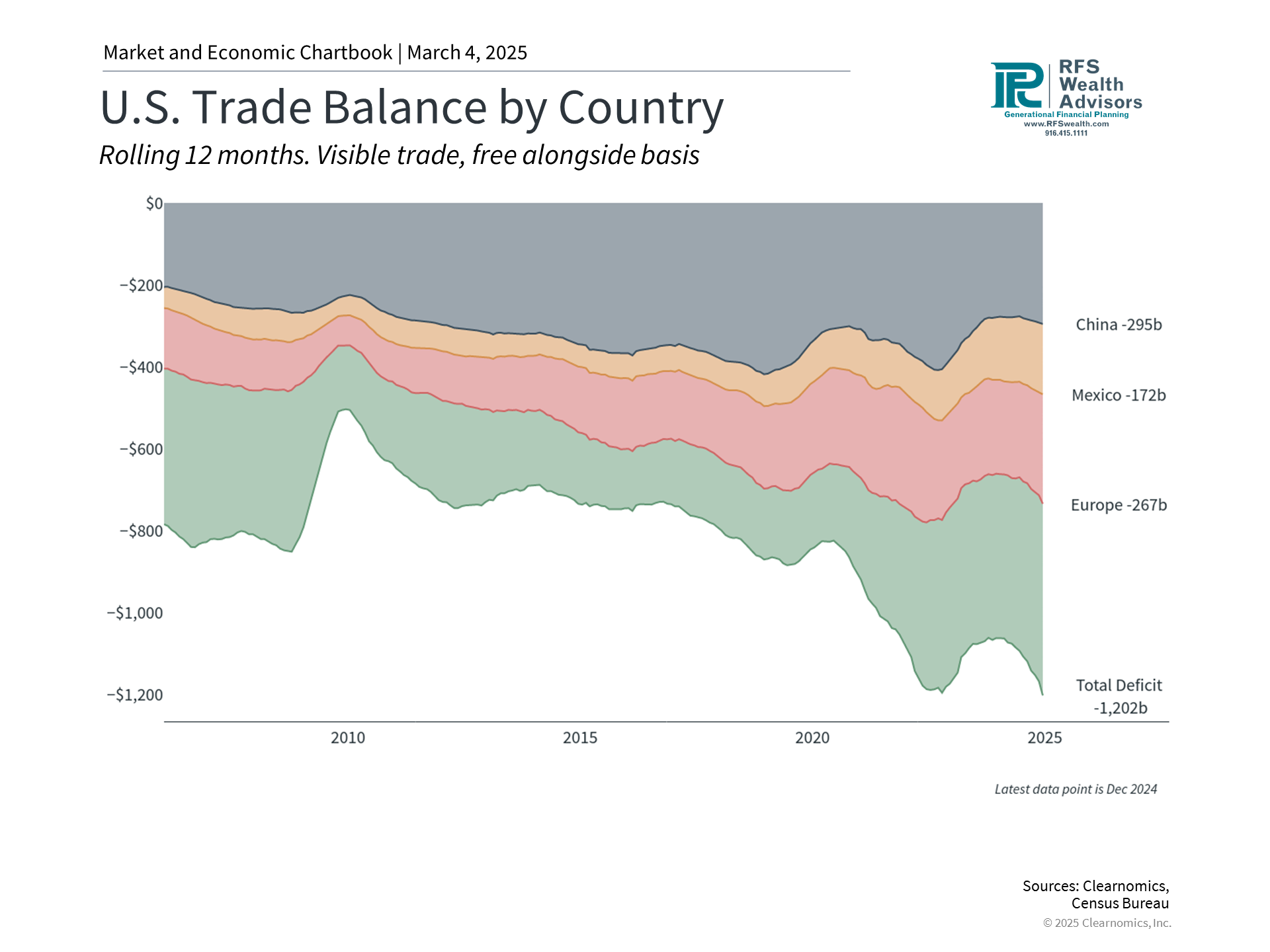
The concern surrounding tariffs stems from their nature as import taxes that could increase costs throughout the supply chain. Given existing inflationary pressures, additional tariffs might further impact consumer prices. This situation becomes more complex if trading partners implement reciprocal measures, potentially leading to broader trade disputes. The accompanying visualization highlights America's substantial trade imbalances with major economic partners.
Historical context is crucial when evaluating current trade measures. The United States has employed tariffs throughout its economic history, reaching peak usage during the Great Depression. These measures often aim to protect strategic domestic industries, particularly in areas crucial to national security and technological advancement.
During Trump's previous administration, similar tariff strategies ultimately resulted in new trade agreements with various partners including Mexico and China. The administration frequently employs tariffs as leverage to achieve broader policy objectives, from immigration control to addressing drug trafficking.
Market responses to tariff announcements often overstate their eventual economic effects, especially when measures prove temporary or lead to negotiated solutions. Despite trade-related market volatility from 2017 to 2019, overall market performance remained robust.
While current trade tensions present unique characteristics, they illustrate how market concerns don't always materialize into lasting economic impacts.
Market corrections are an expected part of the investment cycle
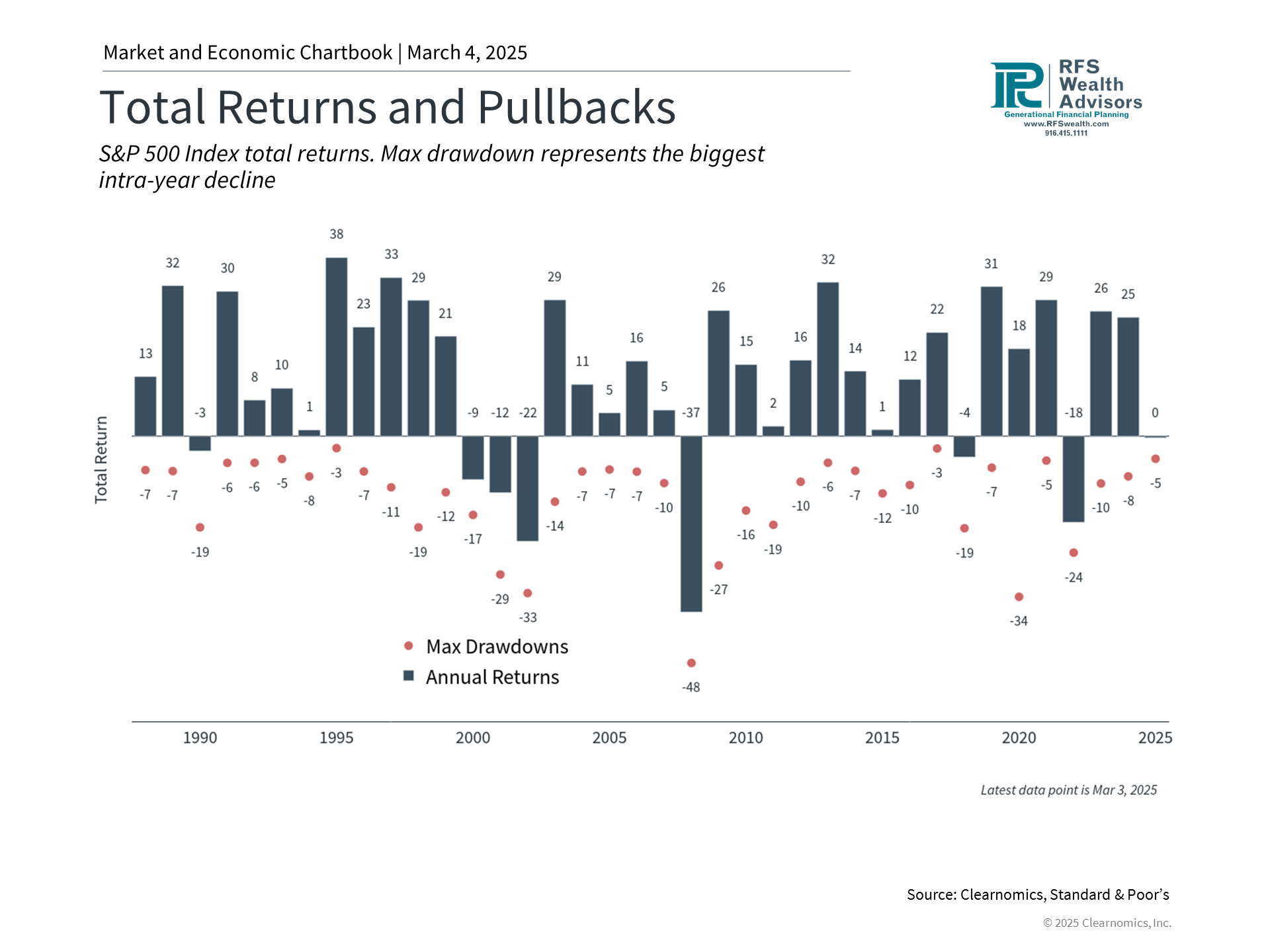 |
The current market retreat of approximately 5% occurs against a backdrop of intense media coverage. Such movements, while uncomfortable, represent a regular feature of market behavior. Similar or larger declines occurred multiple times in recent years, including twice in 2024, three instances in 2023, and numerous occasions during 2022's bear market.
The steady climb to record highs in recent years may have created unrealistic expectations for continuous upward momentum. Though year-to-date performance hasn't met initial optimistic projections centered on growth-friendly policies, numerous positive economic indicators persist.
Recent corporate earnings reports showed robust growth. The unemployment rate remains favorable at 4.0%, wage growth continues, and productivity gains remain steady. High-yield bond spreads staying below pre-pandemic levels suggests fixed-income investors maintain a more optimistic outlook than equity markets currently reflect.
Long-term investment success requires maintaining market exposure through volatility
While technology stocks face challenges, other market segments have demonstrated strength in recent months. Various asset classes and geographic regions have performed well, highlighting diversification benefits. Fixed-income investments have appreciated as yields declined, providing valuable portfolio stabilization during equity market turbulence.
Historical evidence supports maintaining a long-term investment approach during market volatility. Though short-term fluctuations can be disconcerting, consistent market participation through various cycles has historically rewarded patient investors through compounding returns.
While trade-related headlines will likely continue generating market reactions, successful investing requires focusing beyond short-term movements. Building and maintaining well-structured portfolios supports long-term financial objectives measured in years and decades rather than days or weeks.
The bottom line? Recent trade policy developments have triggered market adjustments across major indices. Historical evidence suggests maintaining strategic long-term positioning, rather than reacting to daily fluctuations, offers the best path to financial objectives.
